
The mission
A million dollars of measured savings.
Added up one trip at a time: on the trips where driving came out cheaper, this is how much cheaper it was. Trips where the plane wins are counted in the library too and reported beside it. The counter is live and never padded.
Measured so far
$0
Summed over the trips where driving is cheaper
Stress gap
0%
Average gap between the two scores, on this site’s own scale
Average per trip
$0
Across every route in the library
Where it started
The eight-hour drive that beat a two-hour flight.
Dallas to New Orleans is the trip that made me build this. On paper the plane wins the afternoon: two hours in the air against eight on the road. I took the car, and I'd take it again.
8h 42m
Behind the wheel
3
Supercharger stops
$112
Cost in the car
$302
Cost to fly
54 / 27
Stress — fly / car
One thing to declare before the numbers: I prefer to drive. That is a preference, not a finding, and it is the reason the method, the rates and the sources are written out in full on this site so you can check the maths against your own view. On a flight day the schedule is set by someone else — the gate, the boarding group, the seat width. That is a fact about flying, not a complaint about airlines.
The drive is longer and it is still the easier day. I leave when I'm ready. The car holds the lane and the speed on I-20 and I-49, and my job shrinks to paying attention. The stops are where you eat anyway. Nobody weighs my bag. By the time I'm over the water into the city I've had a whole day of my own instead of four hours of someone else's schedule with a flight in the middle.
I'll be honest about one thing, though: most drives are full of places worth stopping for, and this one isn't really one of them. There is not much to look at crossing Louisiana. The day still beat the flight — it just didn't win on scenery.
That's one person, though, and one person is an anecdote. So I went and checked whether it holds up. It mostly does: 48% of Americans name flying as the most anxious way to travel, against 14% for driving, and the tipping point where people say they'd rather fly than drive sits at nine hours and 39 minutes. New Orleans is inside that. The survey number describes an ordinary car with a person steering the whole way, which is why this site pushes the line further out when the car is doing that part.
Run this trip through the site today and it agrees with the day I had: 54 for the flight against 27 for the car, about 50% calmer on the road. On money it is closer than people expect — the car keeps $190 between the two.
None of that means driving always wins. Plenty of trips on this site go the other way, and the ones where the plane wins are the reason to trust the ones where it doesn't. It means the eight-hour drive is a different proposition than it was when a person did all the steering, and the comparison is worth running properly rather than assuming.

Who built it
I quit short flights in 2019.
I'm Keith. I grew up without much money. Flying wasn't a choice we weighed up and turned down — it simply wasn't on the table. I didn't get on a plane until I was in my twenties. A plane ticket is a privilege, and a lot of people still don't have it.
Driving wasn't easy either. I got my license at sixteen, in 2001, and almost immediately had to help drive across the country to Washington, DC. Hours of highway, my hands on the wheel, everyone in the car depending on me not making a mistake. I remember how nerve-racking it was. That's the part people skip past: driving was stressful too. So for most of my life, both options cost you something — money or nerves, usually both.
I bought my first Tesla in 2019. Since then I've owned six of them, and in seven years of driving the only thing I've replaced is tires. No oil, no belts, no transmission, no surprise invoice at a dealership.
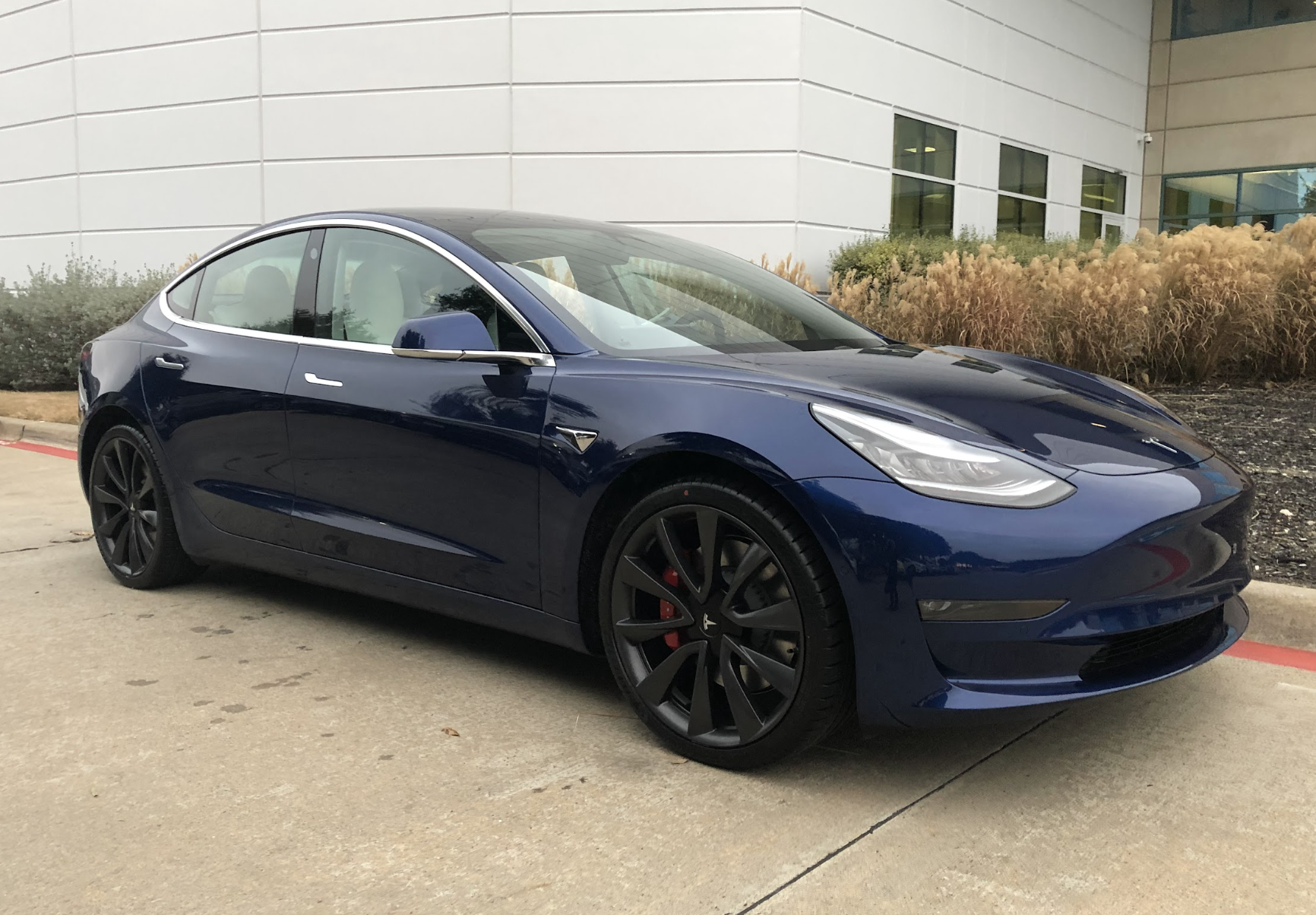
What changed wasn't the maintenance bill, though. It was how I felt when I arrived.
It isn't driving versus flying anymore. It's two seats: one in a plane, one in a car that's doing the steering.
That's the whole point of this site. For decades the alternative to a flight carried its own cost — hours of your own attention on a highway. With the car handling the steady part of the drive, that cost is smaller, and what is left to compare is money, time, stress and carbon.
So I built the sum I kept doing in my head. Give it two cities and how many of you are going, and it tells you what you'd save and what sort of day each one is. Every number it uses is printed on the site and you can change any of them — a figure you can't check isn't worth much.
For the record: this is independent and unpaid. I don't work for Tesla, I have no relationship with any airline, and nobody sponsors a verdict either way. I do own the car, which is the bias to weigh these numbers against.
The scoreboard
Two milestones, both checkable by anyone.
When one is hit, the next number goes up here and this page says so.
Routes priced both ways
0 of 1,000
Savings measured on the trips driving wins
$0 of $1,000,000
Is a million dollars realistic?
It's just multiplication. The average trip here keeps about $0, so the rest of the million is roughly 0 more trips driven instead of flown. That is a busy weekend for a popular link, and years for an unpopular one. The bar above says which one this is.
The rules for that counter, in case you want to hold me to them: it only counts trips where driving actually came out cheaper, it never gets rounded up, padded, or seeded with invented trips, and it can go down if the pricing model changes and the real answer drops. If it says a small number, it is a small number.
Why hours are the second number
Money is easy to argue about. Time isn't. Every flight costs you the security line, the waiting around, and a ride to an airport at both ends. None of that is on the ticket, so it gets counted here next to the dollars instead.
How the stress figure is built is written out on the stress score page, and every dollar is itemised on the pricing page.
Add your trip to the library.
Price the trip you have coming up and it moves the counter above. Four questions, about twenty seconds.
Plan my tripCurious what everyone else's trips add up to? Read the findings →